
Introduction: Navigating the Cloud Ecosystem
The shift from on-premises infrastructure to cloud computing has become a fundamental strategic move for modern businesses. In this transformative landscape, the decision of Choosing The Best Cloud Provider is arguably one of the most critical an organization will make. The right choice can unlock unprecedented scalability, cost efficiency, and innovation. Conversely, a poor choice can lead to vendor lock-in, unforeseen expenditures, and performance bottlenecks.
This comprehensive guide will delve deep into the multifaceted considerations required to evaluate and select the optimal cloud service provider (CSP) for your specific organizational needs. We will explore key domains, from technical capabilities and service offerings to compliance, pricing structures, and long-term strategic alignment. By the end of this analysis, you will possess a robust framework for making an informed and profitable decision.
Technical and Performance Assessment
A CSP’s technical foundation dictates the performance, reliability, and capability of your deployed applications. This assessment must go beyond simple specifications and evaluate how the infrastructure supports your unique workloads.
A. Global Footprint and Regional Availability
The physical location of data centers directly impacts latency, compliance, and disaster recovery.
Proximity and Latency: For applications requiring real-time interaction (e.g., high-frequency trading, interactive gaming), the geographic distance between your users and the data center is paramount. Lower latency translates directly into a better user experience and potentially higher conversion rates, a key factor for AdSense revenue optimization.
Regional Compliance: Certain regulations (e.g., GDPR, local data sovereignty laws) mandate that data must be stored and processed within specific geographic boundaries. A provider with an extensive and legally compliant global footprint simplifies adherence to these mandates.
Availability Zones (AZs) and Regions: A region is a distinct geographic location, and an AZ is one or more discrete data centers within a region. A provider’s capability to offer deployment across multiple, physically isolated AZs ensures high availability and resilience against localized failures.
B. Core Computing and Networking Services
The fundamentals of any cloud offering are compute, storage, and networking. Superior CSPs offer differentiated services in these areas.
Compute Instances (Virtual Machines): Evaluate the range of instance types available, including those optimized for general purpose, compute-intensive, memory-intensive, and GPU-accelerated workloads (crucial for AI/ML). The ability to scale vertically (instance size) and horizontally (instance count) seamlessly is non-negotiable.
Networking Architecture: Assess the network throughput and interconnectivity within the CSP’s backbone. Look for advanced features like dedicated connection services (e.g., AWS Direct Connect, Azure ExpressRoute) that bypass the public internet, offering predictable, low-latency performance essential for enterprise connectivity.
Serverless Computing: Modern architectures are shifting towards serverless models (e.g., AWS Lambda, Azure Functions). A robust serverless platform allows developers to focus purely on code, drastically reducing operational overhead and often resulting in a more cost-effective, auto-scaling deployment.
C. Storage Solutions and Data Management
Data is the lifeblood of any application, and the CSP must offer a hierarchy of storage options tailored for different needs.
Object Storage: Offers massive scalability and durability (often $99.999999999\%$ uptime) for unstructured data (backups, archives, media files). Evaluate features like data tiering (moving old data to cheaper archival tiers automatically).
Block Storage (Volumes): Used by virtual machines as the primary disk. Assess IOPS (Input/Output Operations Per Second) performance and latency, which directly impact application responsiveness.
File Storage: Network-attached storage (NAS) protocols (NFS, SMB) for shared file access across multiple instances. Essential for traditional enterprise workloads.
Database Services: Beyond offering compute for self-managed databases, evaluate the provider’s managed database services (Relational and NoSQL). These services handle patching, backups, and scaling, dramatically reducing administration time.
Security, Compliance, and Governance
In the cloud, security is a shared responsibility. The CSP secures the “cloud itself” (the underlying infrastructure), while the customer secures “in the cloud” (their data, applications, and configurations).
A. Security Posture and Tools
A strong security portfolio is crucial for protecting high-value data and ensuring business continuity.
Identity and Access Management (IAM): This is the foundation of cloud security. The CSP must offer granular, role-based access control (RBAC) to enforce the principle of least privilege. Strong multi-factor authentication (MFA) and integration with existing enterprise directories (e.g., Active Directory) are mandatory.
Network Security: Evaluate built-in firewalls, virtual private cloud (VPC) segmentation, intrusion detection systems (IDS), and DDoS protection services. These tools create the virtual perimeter that protects your resources.
Encryption: Data must be encrypted both in transit (using TLS/SSL) and at rest (using managed encryption keys). Assess the provider’s Key Management Service (KMS) capabilities, which allow you to control the cryptographic keys used to protect your data.
B. Regulatory Compliance and Certifications
A CSP’s compliance certifications determine if they are suitable for regulated industries.
- Common Certifications: Look for standard global certifications such as:A. ISO 27001: For information security management.B. SOC 1, 2, and 3: Reports on controls relevant to security, availability, processing integrity, confidentiality, and privacy.
C. HIPAA: Required for handling Protected Health Information (PHI) in the healthcare sector (in the US).
D. PCI DSS: Necessary for processing credit card information.
Industry-Specific Controls: For financial services, government, or defense contracts, specialized certifications and sovereign cloud offerings may be required. Always request the provider’s current audit reports.
C. Governance and Auditing Capabilities
Effective cloud management requires robust tools for monitoring and accountability.
Logging and Monitoring: Comprehensive logging of all API calls, network traffic, and resource changes is essential for security auditing and troubleshooting. The provider must offer centralized logging and analytics services.
Policy Enforcement: Tools to define and automatically enforce organizational policies (e.g., “all storage buckets must be encrypted,” “no public IP addresses on production machines”) prevent human error and ensure continuous compliance.
 Cost Management and Economic Value
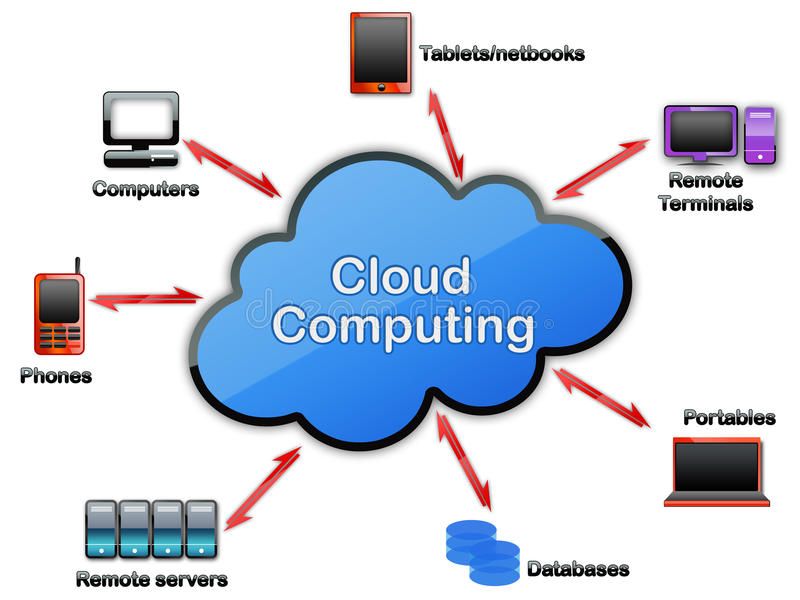 Cost Management and Economic Value
The promise of cost savings is a primary driver for cloud adoption, yet many organizations struggle with unexpected bills. A deep understanding of the CSP’s economic model is vital.
A. Pricing Models and Transparency
Cloud pricing is inherently complex, involving thousands of SKUs and consumption metrics.
Pay-As-You-Go (PAYG): The standard model where you pay only for the resources consumed. While flexible, it requires meticulous monitoring to avoid “bill shock.”
Reserved Instances (RIs) / Savings Plans: Offer significant discounts (up to $75\%$ or more) in exchange for a commitment (typically one or three years) to a specific level of usage. This is ideal for stable, long-term workloads.
Spot Instances: Highly discounted, unused compute capacity that can be reclaimed by the CSP with short notice. Perfect for fault-tolerant, non-critical, or batch processing workloads.
Egress Fees (Data Out): Data transfer fees for moving data out of the cloud (to the internet or other regions) are a major hidden cost. Providers often incentivize bringing data in (ingress is often free) but penalize data moving out.
B. Total Cost of Ownership (TCO) Analysis
When comparing providers, a simple rate comparison is insufficient. A full TCO must be conducted.
Operational Costs (OpEx): Includes the actual usage fees, managed service costs, and the ongoing labor cost of managing the resources. Cloud native tools often reduce labor costs.
Capital Costs (CapEx) Avoidance: The savings from no longer needing to purchase, house, power, and cool your own physical hardware.
Exit Strategy Costs: Account for the potential cost and time required to migrate your data and applications away from the provider. High egress fees can significantly impede an exit strategy.
C. Financial Incentives and Support
For large enterprises, the upfront negotiation and partnership programs can dramatically alter the economics.
Enterprise Discount Programs: Volume-based discounts and custom pricing for high-volume, long-term commitments.
Free Tier and Credits: Most providers offer a perpetual free tier or temporary credits for testing and development, which is invaluable for initial prototyping.
Service Ecosystem and Innovation
A provider’s ecosystem of services and its pace of innovation differentiate market leaders from niche players.
A. Advanced Services and Differentiated Capabilities
Look beyond the foundational IaaS (Infrastructure as a Service) and assess the PaaS (Platform as a Service) offerings.
AI and Machine Learning: Market leaders offer fully managed AI services (e.g., Computer Vision, Natural Language Processing, managed training/inference platforms). These services are critical for organizations seeking to integrate advanced analytics and intelligence.
Internet of Things (IoT): A robust platform for managing device connectivity, data ingestion, and security for massive fleets of IoT devices.
Blockchain and Quantum Computing: While nascent, these are indicators of the provider’s commitment to future-proofing their platform and driving bleeding-edge innovation.
B. Developer Experience (DX) and Tooling
A productive developer team is a profitable one. The ease of use, documentation, and tooling are paramount.
SDKs and APIs: Comprehensive Software Development Kits (SDKs) for multiple languages and well-documented Application Programming Interfaces (APIs) allow for smooth automation and integration.
Infrastructure as Code (IaC): Deep support for IaC tools like Terraform or CloudFormation/ARM templates enables reproducible, version-controlled infrastructure deployment.
Monitoring and Observability: Tools that unify logs, metrics, and traces (telemetry) provide full visibility into application health, making troubleshooting faster and reducing downtime.
C. Vendor Lock-In Mitigation and Portability
While complete avoidance of vendor lock-in is unrealistic, strategic mitigation is essential.
Open Standards: Favor providers who support open-source technologies (e.g., Kubernetes, Linux) and open APIs, making workloads more portable.
Multi-Cloud and Hybrid Cloud: Assess the provider’s willingness and capability to interoperate with other clouds and your on-premises data centers. Services like managed Kubernetes (EKS/AKS/GKE) simplify running the same containerized applications anywhere.
 Organizational and Support Factors
 Organizational and Support Factors
The relationship with a CSP is a long-term partnership that extends beyond just the technology.
A. Service Level Agreements (SLAs) and Reliability
The SLA is the provider’s contractual promise regarding uptime and performance.
Uptime Guarantee: Most major providers offer $99.99\%$ (four nines) or $99.999\%$ (five nines) for critical services. Understand the Remedy if the SLA is breached (typically service credits).
Defined Metrics: Ensure the SLA clearly defines how downtime is measured (e.g., region-wide failure vs. single AZ failure).
B. Technical Support Structure
The quality and responsiveness of technical support can save the day during a critical outage.
Tiered Support: Evaluate the different support tiers (Basic, Developer, Business, Enterprise) and the associated costs and response times. For production systems, a guaranteed one-hour response time for critical issues is often mandatory.
Documentation and Community: Comprehensive, up-to-date documentation and a large, active community forum can solve minor issues faster than a support ticket.
C. Vendor Stability and Strategic Vision
A partnership with a major CSP should be viewed as a 5-10 year commitment.
Financial Health: The provider must be financially stable and committed to the long-term investment required to maintain technological superiority.
Future Roadmap: Understand the provider’s strategic vision. Are they investing in the areas your business needs (e.g., quantum computing, sustainable infrastructure, specific geographic regions)? Strategic alignment prevents disruptive migrations later on.
Conclusion
The optimal cloud provider is not universally the largest or the cheapest, but the one that offers the best fit across technical requirements, compliance needs, and financial goals.
By systematically evaluating the provider across the five critical dimensions—Technical Performance, Security & Compliance, Cost Management, Service Ecosystem, and Organizational Support—organizations can move beyond anecdotal evidence and make a data-driven choice. This strategic decision will not only ensure business resilience and regulatory adherence but will also pave the way for accelerated digital transformation and a maximized return on investment, which directly impacts the profitability derived from initiatives like Google AdSense optimization and overall search engine visibility.