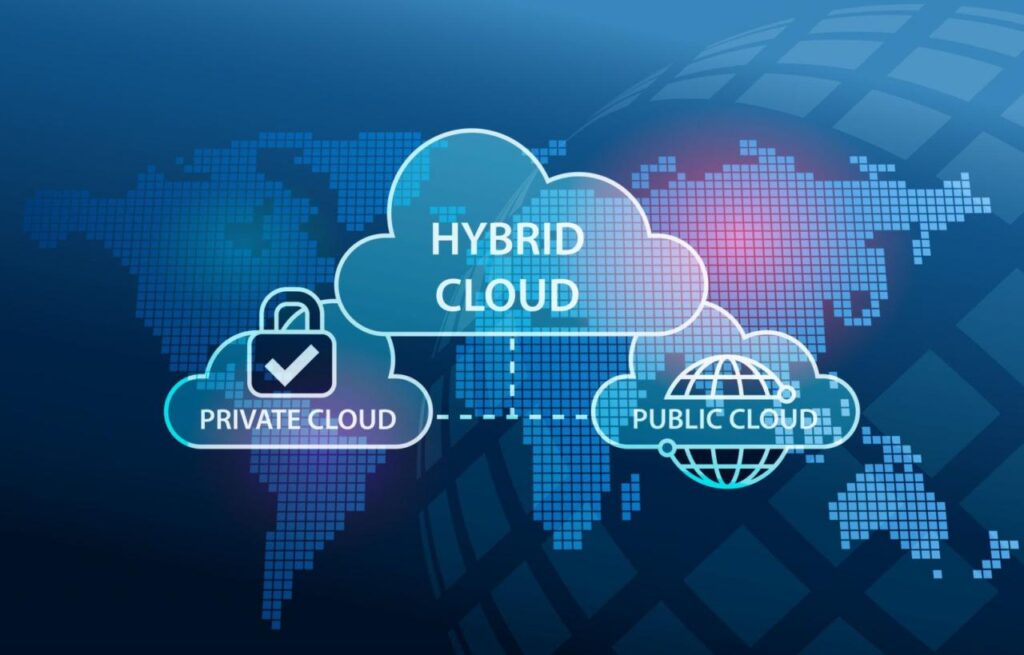
Introduction: The Imperative for Highly Secured Private Clouds
In an era defined by relentless cyber threats, escalating regulatory demands, and the imperative for absolute data sovereignty, the notion of a high-security cloud environment is no longer a luxury—it is a non-negotiable business requirement. While public clouds offer unparalleled scalability and convenience, highly regulated industries (such as finance, government, healthcare, and defense) often demand a level of control and isolation that only a High-Security Private Cloud Solution can truly provide.
This in-depth guide is designed for Chief Information Security Officers (CISOs), infrastructure architects, and IT strategists seeking to understand, design, and implement a private cloud architecture that offers maximum security and compliance assurance. We will dissect the technical, operational, and governance pillars necessary to build and maintain an impenetrable fortress for your organization’s most sensitive digital assets, simultaneously optimizing the content for high-value search queries crucial for favorable AdSense yields.
Defining the Security Advantages of Private Cloud
Understanding why private cloud fundamentally differs from its public and hybrid counterparts is the first step in justifying the investment. The key distinction lies in ownership and exclusive control.
A. Exclusive Ownership and Resource Isolation
In a private cloud model, the entire infrastructure stack—from the bare metal servers and networking gear to the hypervisors and management layers—is dedicated solely to one organization.
Zero Multi-Tenancy Risk: Unlike public clouds where resources are shared among thousands of customers (multi-tenancy), private cloud environments eliminate the “noisy neighbor” or “security breach ripple” effect originating from other tenants. This physical and logical isolation minimizes the potential attack surface.
Customized Hardware Security: Organizations can select, inspect, and configure every hardware component, including specialized security chips (e.g., Trusted Platform Modules or TPMs) and hardware security modules (HSMs) for cryptographic key management, ensuring full hardware supply chain integrity.
B. Deep Configuration Control at Every Layer
The provider of a high-security private cloud, whether managed or self-deployed, grants the customer unparalleled access to the underlying operational layers.
Network Segmentation Mastery: CISOs gain full control over the physical and virtual networking layers, enabling highly granular micro-segmentation, defining precise trust boundaries, and deploying bespoke intrusion prevention systems (IPS) and next-generation firewalls (NGFWs).
Operating System and Hypervisor Hardening: The ability to select, patch, and harden the specific versions of the operating systems and hypervisors (e.g., VMware, OpenStack, Hyper-V) used across the environment, rather than relying on a public cloud vendor’s schedule, ensures vulnerabilities are addressed immediately.
C. Inherent Data Sovereignty and Compliance Assurance
Private clouds are the primary choice for organizations with strict geographical or regulatory data storage requirements.
Physical Location Guarantee: Since the infrastructure resides in a facility or data center explicitly chosen by the organization, 100% assurance regarding the physical location of the data is guaranteed, satisfying the most stringent national data residency laws.
Simplified Auditing and Compliance: Auditors gain direct, unimpeded access to inspect physical security controls, operational logs, and infrastructure configurations, dramatically simplifying compliance with frameworks such as HIPAA, PCI DSS, FedRAMP, and Europe’s GDPR.
Architecture and Implementation for Maximum Security
Building a high-security private cloud is not just about choosing the right technology; it involves architecting layers of security controls from the ground up.
A. Zero Trust Architecture (ZTA) Principles
Modern private clouds must embed ZTA, assuming no user, device, or application is trustworthy by default, regardless of its location within the network perimeter.
Identity-Centric Access: Implement strong, unified Identity and Access Management (IAM) systems that govern access to every resource, utilizing multi-factor authentication (MFA) and adaptive access policies based on context (location, device health).
Micro-Segmentation Enforcement: Isolate workloads and services down to the individual application or container level. A failure or compromise in one segment should be unable to traverse laterally to another critical segment.
Continuous Verification: All traffic and requests, even internal east-west traffic, must be authenticated, authorized, and encrypted. Policy enforcement points must continuously monitor and log activity.
B. Advanced Cryptographic Controls and Key Management
Encryption is the last line of defense. A secure private cloud must excel at protecting data both at rest and in transit.
Hardware Security Module (HSM) Integration: Critical cryptographic keys must be stored and managed within dedicated, tamper-resistant HSMs. Private clouds allow organizations to mandate the use of FIPS 140-2 Level 3 certified HSMs, ensuring the highest level of key protection.
Data-at-Rest Encryption Mandate: All storage, including block, file, and object storage, must be encrypted using enterprise-grade algorithms (e.g., AES-256). The customer retains complete control over the encryption keys, offering a “hold your own key” (HYOK) model superior to public cloud alternatives.
Secure Boot and Trusted Computing: Utilizing technologies like Intel TXT or AMD SEV to ensure the integrity of the boot process and verify that only cryptographically signed and authorized code is running on the compute nodes.
C. Network Defense in Depth and Virtual Private Cloud (VPC) Design
The network topology within the private cloud must be engineered for compartmentalization and threat detection.
Air-Gapped Management Networks: Separate the physical and virtual management interfaces from the tenant networks to prevent unauthorized lateral movement during an attack.
High-Fidelity Traffic Inspection: Deploy advanced network monitoring solutions (Network Detection and Response or NDR) that conduct deep packet inspection (DPI) and behavioral analysis to spot subtle command-and-control (C2) communications often missed by traditional firewalls.
Custom DDoS and WAF Deployment: Implement highly customized Web Application Firewalls (WAFs) and Distributed Denial of Service (DDoS) mitigation services optimized specifically for the organization’s unique application traffic patterns and potential attack vectors.
 Governance, Operations, and Compliance Management
 Governance, Operations, and Compliance Management
Security is an ongoing operational commitment. The best architecture is useless without rigorous governance and disciplined operations.
A. Auditing, Logging, and Observability Frameworks
The ability to prove the security posture through comprehensive audit trails is critical for compliance and incident response.
Immutable Logging: All system, security, and access logs must be forwarded to a centralized, tamper-proof repository (e.g., a Write Once, Read Many or WORM storage system) to ensure their integrity for forensic investigation.
Continuous Compliance Monitoring (CCM): Automated tools must continuously scan the private cloud configurations against defined security baselines (e.g., CIS Benchmarks) and compliance controls, alerting security teams to any drift or policy violation in real-time.
Security Information and Event Management (SIEM) Integration: All log data must feed into a mature SIEM platform that utilizes machine learning and correlation rules to distinguish genuine threats from background noise, accelerating the Mean Time To Detect (MTTD) a breach.
B. Patch Management and Vulnerability Remediation
Maintaining a pristine patch level is more challenging but infinitely more controllable in a private environment.
Risk-Based Patch Prioritization: Develop a rigorous schedule and process for patching not only operating systems but also the underlying firmware, hypervisors, and storage controllers, prioritizing fixes based on exploitability and asset criticality.
Automated Configuration Drift Management: Use Infrastructure as Code (IaC) tools (e.g., Ansible, Chef, Puppet) to automate configuration deployment and remediation, ensuring that any unauthorized changes (configuration drift) are immediately reverted or flagged.
Regular Penetration Testing: The organization should mandate frequent, comprehensive, and potentially unannounced penetration tests and red team exercises against the private cloud infrastructure and applications to validate the security controls.
C. Operational Continuity and Disaster Recovery (DR)
A secure cloud must also be an available cloud. High security involves resilience against operational failure and attack.
Geographically Isolated DR Sites: Implement a complete, mirrored recovery environment in a physically separate data center location to ensure recovery from regional disasters or catastrophic attacks.
Immutable Backups and Snapshots: Utilize backup solutions that enforce immutability, preventing ransomware or malicious actors from encrypting or deleting the backup copies required for restoration.
Defined Incident Response (IR) Plans: Practice and test detailed incident response procedures specifically tailored to the private cloud environment, including communication plans, forensic data collection protocols, and legal counsel coordination.
 Strategic Financial and Partnership Considerations
 Strategic Financial and Partnership Considerations
The decision to invest in a high-security private cloud is a strategic financial one, balancing capital expenditure (CapEx) against the avoidance of risk-related costs.
A. Total Cost of Ownership (TCO) Versus Risk Cost
While private cloud often involves higher initial investment (CapEx), the long-term TCO must account for the substantial savings derived from risk mitigation.
Avoidance of Regulatory Fines: The cost of a major data breach fine (e.g., GDPR violations) can dwarf the operational costs of a private cloud. Compliance assurance is a direct financial value.
Insurance Premium Reduction: Organizations with demonstrably superior security postures, such as those provided by highly controlled private clouds, often qualify for lower cyber insurance premiums.
Predictable Cost Model: Unlike the variable operational expenditures (OpEx) of public cloud that can spike, the private cloud offers a more predictable capacity and cost model, simplifying long-term budgeting.
B. Vendor and Partner Selection Criteria
The success of a private cloud often hinges on the quality of the technology partners and managed service providers (MSPs).
Security Expertise of MSPs: If outsourcing management, the MSP must demonstrate deep, verifiable security and compliance expertise, holding relevant certifications (e.g., Certified Cloud Security Professional or CCSP).
Transparent Service Level Agreements (SLAs): Demand highly granular SLAs that cover not just uptime but also Mean Time To Recover (MTTR) and guaranteed response times for security incidents.
Hardware Refresh Cycle Management: Ensure the provider or internal team has a funded, disciplined plan for hardware lifecycle management to avoid the operational and security risks associated with running outdated or end-of-life equipment.
C. Integration with Hybrid and Multi-Cloud Strategies
Few modern enterprises run on a pure private cloud. The strategy must accommodate hybrid integration.
Secure Interconnects: Utilize high-speed, dedicated, and encrypted connections (e.g., VPNs or dedicated lines) to securely link the private cloud with necessary public cloud services or other regional data centers.
Unified Management Plane: Implement a single pane of glass (management tool) that can orchestrate and apply consistent security policies across the private cloud, public cloud, and traditional on-premises environments, reducing complexity and human error.
Conclusion
The high-security private cloud is not a step backward into the data center past, but a crucial strategic investment for the future. It represents the pinnacle of control, compliance, and isolation necessary for organizations operating under intense regulatory scrutiny or managing highly valuable intellectual property.
By meticulously implementing the principles of Zero Trust, advanced cryptography, rigorous operational governance, and disciplined auditing, organizations can create a digital fortress that mitigates the most sophisticated cyber risks. This mastery over one’s digital destiny ultimately ensures business continuity and reinforces market trust, two critical components for sustained growth and maximizing the profitability of online ventures and associated platforms like Google AdSense.