The concept of global trade is currently moving through one of the most transformative and turbulent periods in modern history. For decades, the world operated under the assumption that open borders and free trade were the ultimate goals for every developing and developed nation. This era of hyper-globalization focused almost entirely on driving down costs and maximizing the speed of production across the entire planet. However, the landscape has changed dramatically as political tensions and national security concerns begin to take center precedence over simple profit margins.
We are now witnessing a shift where “efficiency” is being replaced by “resilience” as the most important keyword in the corporate boardroom. Governments are no longer bystanders in the economic arena but are actively shaping trade routes to align with their strategic geopolitical alliances. This means that the future of trade is no longer just about where a product can be made most cheaply.
Instead, it is about where a product can be made most safely without the risk of political blackmail or sudden supply chain collapses. As we look beyond traditional borders, we see a world that is becoming more fragmented yet more intentional in its economic partnerships. This article explores the deep complexities of this new era and what it means for the global movement of goods and capital.
The Shift from Global to Regional
The dream of a single, unified global market is slowly fading into the background of economic history books. In its place, we are seeing the rise of powerful regional trade blocs that prioritize geographic and political proximity. This shift is often referred to as “near-shoring” or “regionalization,” and it is changing the way companies plan their long-term logistics.
By keeping production closer to home, businesses can avoid the massive disruptions that come with long-distance shipping and maritime instability. This move also allows for faster response times to local market changes and consumer demands within a specific region. While it might be more expensive to produce goods locally, many firms believe the price is worth paying for the sake of certainty.
A. North American trade agreements are being strengthened to reduce reliance on distant manufacturing hubs in other hemispheres.
B. European nations are investing heavily in Mediterranean supply chains to secure their essential industrial components.
C. Southeast Asian countries are forming deeper bonds to create a self-sustaining economic ecosystem that serves their growing middle class.
D. Regional infrastructure projects, like high-speed rail and localized ports, are receiving record levels of government funding.
E. Trade policies are being rewritten to offer tax incentives for companies that choose to keep their supply chains within regional borders.
The New Weaponization of Trade
Trade has always been a tool of diplomacy, but it has now become a primary weapon in the arsenal of geopolitical conflict. Modern governments are increasingly using export bans, sanctions, and investment restrictions to achieve their political objectives without firing a single shot. This “economic statecraft” creates a high level of uncertainty for multinational corporations that operate in multiple jurisdictions.
When trade is weaponized, the flow of goods can be stopped overnight due to a political disagreement thousands of miles away. Companies are now forced to hire geopolitical analysts to predict where the next trade barrier might appear. This environment makes long-term planning incredibly difficult and forces businesses to diversify their operations across many different neutral territories.
A. Export controls on sensitive technologies are being used to slow down the military advancement of rival nations.
B. Financial sanctions are cutting off entire economies from the international banking system as a form of non-kinetic warfare.
C. Import quotas are being placed on essential commodities like food and fuel to exert pressure during diplomatic negotiations.
D. Dual-use technologies, which can be used for both civilian and military purposes, are facing extreme regulatory scrutiny.
E. International trade organizations are struggling to mediate disputes as nations prioritize their own security over global rules.
Semiconductors and the Tech Cold War

The most visible battleground in the age of geopolitics is the high-tech sector, specifically the production of advanced semiconductors. These tiny chips are the lifeblood of everything from smartphones to advanced missile systems and artificial intelligence. Because the manufacturing of these chips is concentrated in just a few locations, they have become a major point of global friction.
Nations are now spending hundreds of billions of dollars to build their own domestic chip factories, known as “fabs.” This is a massive departure from the previous model where the world relied on a centralized hub for all its technological needs. The goal is to achieve “technological sovereignty” so that no foreign power can shut down a nation’s digital economy.
A. Massive government subsidies are being poured into the construction of local semiconductor plants in the US and Europe.
B. Talent wars are erupting as countries compete to attract the world’s most brilliant engineers and computer scientists.
C. Intellectual property laws are being used as shields to prevent the transfer of critical tech secrets to competitors.
D. Specialized machinery required for chip making is now subject to some of the strictest export rules in history.
E. Software ecosystems are becoming fragmented as different regions develop their own standards for data and privacy.
The Critical Mineral Scramble
As the world transitions to green energy, the focus of trade is shifting from oil and gas to critical minerals like lithium and cobalt. These materials are essential for building electric vehicle batteries and renewable energy infrastructure. The problem is that these minerals are often found in politically sensitive areas or are controlled by a single dominant player.
This has sparked a global race to secure mining rights and processing facilities across Africa, South America, and Australia. Trade agreements are no longer just about consumer goods; they are about securing the raw materials needed for the next century. Countries that control the supply of “green metals” will likely hold the same power that oil-rich nations held in the 20th century.
A. Strategic partnerships are being formed between car manufacturers and mining companies to bypass traditional market fluctuations.
B. Deep-sea mining is being explored as a new frontier for mineral extraction, despite the environmental concerns involved.
C. Recycling technology is being accelerated to reduce the total dependence on newly mined raw materials from overseas.
D. National stockpiles of critical minerals are being created to protect against sudden price spikes or supply embargoes.
E. Environmental, Social, and Governance (ESG) standards are being integrated into trade deals to ensure ethical mineral sourcing.
The Rise of Friend-Shoring
In a world where you cannot trust everyone, you decide to do business only with those you consider friends. This concept, known as “friend-shoring,” is the latest trend in global supply chain management. It involves moving production and sourcing to countries that share similar political values and long-term strategic goals.
While this approach provides a high level of security, it also limits the pool of potential partners and can lead to higher costs. Friend-shoring effectively splits the world into different economic camps, making it harder for global brands to maintain a single identity. It is a move away from the “global village” and toward a world of “trusted circles.”
A. Diplomatic alliances are now the primary precursor to significant new trade and investment agreements between nations.
B. Security clearances are becoming more common for executives who manage sensitive international supply chains.
C. Collaborative research and development projects are being limited to “trusted” partner nations to protect innovation.
D. Joint military exercises are often followed by the signing of major commercial and industrial contracts.
E. Consumer perception is shifting as people increasingly choose to buy products from countries they view as political allies.
The Impact on the Global Consumer
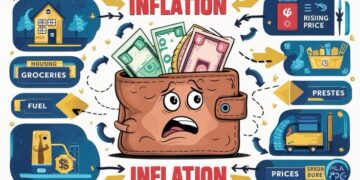
For the average person, the end of borderless trade means that the era of “cheap everything” is likely over. When companies prioritize security and political alignment over cost, the final price of the product inevitably goes up. This is a major factor contributing to the persistent inflation that many economies are currently experiencing.
However, there is also a potential upside for workers in developed nations who are seeing manufacturing jobs return to their shores. The “reshoring” movement is creating a new demand for skilled labor and revitalizing industrial heartlands that were left behind by globalization. The challenge for the consumer will be balancing the desire for low prices with the need for national economic stability.
A. Subscription models and “as-a-service” products are becoming more popular as the cost of physical goods rises.
B. Local “craft” and “homegrown” brands are gaining market share as global shipping becomes more expensive and unreliable.
C. Second-hand markets and repair cultures are seeing a resurgence as people look to extend the life of their electronics.
D. Price volatility for imported food items is becoming a regular part of the grocery shopping experience.
E. Educational programs are being updated to teach the technical skills needed for the new domestic manufacturing economy.
Logistics and the Future of Shipping
The physical act of moving goods across the ocean is also being transformed by the new age of geopolitics. Trade routes that were once considered safe are now being avoided due to regional conflicts or the threat of piracy. This is forcing shipping companies to find longer, more expensive routes or invest in new technologies to protect their cargo.
We are also seeing a shift toward “smart ports” that use automation and AI to speed up the processing of goods while increasing security. These ports are becoming the gatekeepers of the new regional trade blocs. Any country that cannot modernize its shipping infrastructure risks being left out of the high-speed trade networks of the future.
A. Autonomous cargo ships are being tested to reduce the human risk in dangerous or contested international waters.
B. Satellite tracking and blockchain technology are being used to provide real-time transparency for sensitive shipments.
C. Polar trade routes are being explored as the melting ice in the Arctic opens up new paths between the East and West.
D. Insurance premiums for international shipping are skyrocketing in areas deemed to be geopolitical “hot zones.”
E. Port congestion is being managed through advanced predictive analytics to ensure the smooth flow of essential goods.
The Role of Digital Trade and Services
While the trade of physical goods is facing many barriers, the trade of digital services is booming. Software, consulting, and entertainment can be delivered across borders instantly without the need for ships or trucks. This “weightless trade” is becoming a larger portion of the global economy every year.
However, even the digital world is not immune to the influence of geopolitics. Data sovereignty laws are forcing companies to store information within specific national borders, creating a “splinternet.” The future of digital trade will depend on whether nations can agree on a set of rules for the movement of data and intellectual property.
A. Cloud computing giants are building localized data centers to comply with strict national privacy and security regulations.
B. Freelance platforms are allowing workers in emerging markets to participate in the global economy despite trade barriers.
C. Digital tax regimes are being implemented by various countries to capture revenue from multinational tech corporations.
D. Virtual reality and the metaverse are being explored as new platforms for international business meetings and collaboration.
E. Cybersecurity insurance is becoming a mandatory requirement for any company involved in cross-border digital transactions.
Energy Security as Trade Policy
In the past, energy was something you bought on the open market from whoever was selling it. Today, energy is a core component of national security and a major driver of trade policy decisions. Nations are no longer willing to depend on a single, potentially hostile source for their electricity or fuel.
This shift is accelerating the move toward nuclear power and domestic renewable energy sources. Trade deals are now being structured to include energy guarantees and joint investments in power grid infrastructure. The goal is to create a “decoupled” energy system that can function even if global markets are disrupted by conflict.
A. Liquefied Natural Gas (LNG) terminals are being built at a record pace to diversify the energy supply for European nations.
B. Small Modular Reactors (SMRs) are being developed as a portable and secure way to provide nuclear power to remote regions.
C. Electrical interconnections between friendly neighboring countries are being built to share renewable energy surpluses.
D. Energy storage technologies, like giant grid-scale batteries, are receiving massive amounts of venture capital investment.
E. Carbon border adjustment mechanisms are being used to ensure that trade does not undermine domestic climate goals.
The Future of International Finance
The way we pay for global trade is also being influenced by the rise of geopolitics. For decades, the US dollar has been the undisputed king of international commerce, but some nations are now looking for alternatives. This movement toward “de-dollarization” is driven by a desire to avoid the reach of Western financial sanctions.
We are seeing the rise of bilateral trade agreements where countries pay for goods using their own local currencies. While the dollar remains dominant for now, the financial world is becoming more “multi-polar.” This change adds a new layer of currency risk for companies that are used to the stability of a single global reserve currency.
A. Central Bank Digital Currencies (CBDCs) are being designed to facilitate faster and cheaper cross-border payments.
B. Gold is seeing a resurgence as a reserve asset for central banks that want to diversify away from traditional currencies.
C. Alternative payment messaging systems are being developed to compete with the established SWIFT network.
D. Peer-to-peer financial technologies are allowing small businesses to bypass traditional banks for international trade.
E. Currency swap lines between central banks are being used to provide liquidity during times of global financial stress.
Conclusion

The landscape of global trade is shifting in ways that were once thought to be completely impossible.
Every nation is now prioritizing its own survival and security over the convenience of open borders.
We are moving away from a world of total integration and toward a world of strategic alliances.
The costs of this transition will be felt by everyone from the billionaire CEO to the average worker.
Resilience is no longer a luxury for businesses but a fundamental requirement for their continued existence.
Trade routes are being redrawn on maps that are defined by political values rather than just geography.
The digital and physical worlds are both being split by new walls and regulations in this age.
Success in the future will depend on the ability to adapt to a fragmented and unpredictable market.
Investors must look beyond simple financial statements and start analyzing the world through a geopolitical lens.
The era of borderless trade may be ending, but a new era of intentional and secure commerce is beginning.
Only those who understand these deep shifts will be able to navigate the challenges of the coming decade.